
 |
| Pinguicula casabitoana |
About a month ago, Lechenaultia re-shared Paul Temple's trip to find Pingiucula casabitoana. This little photographed species is endemic to a single ridge on Mount Casabito, making it one of the rarest carnivorous plants in the world. (Paul Temple's report indicates that it actually grows on only a few trees).
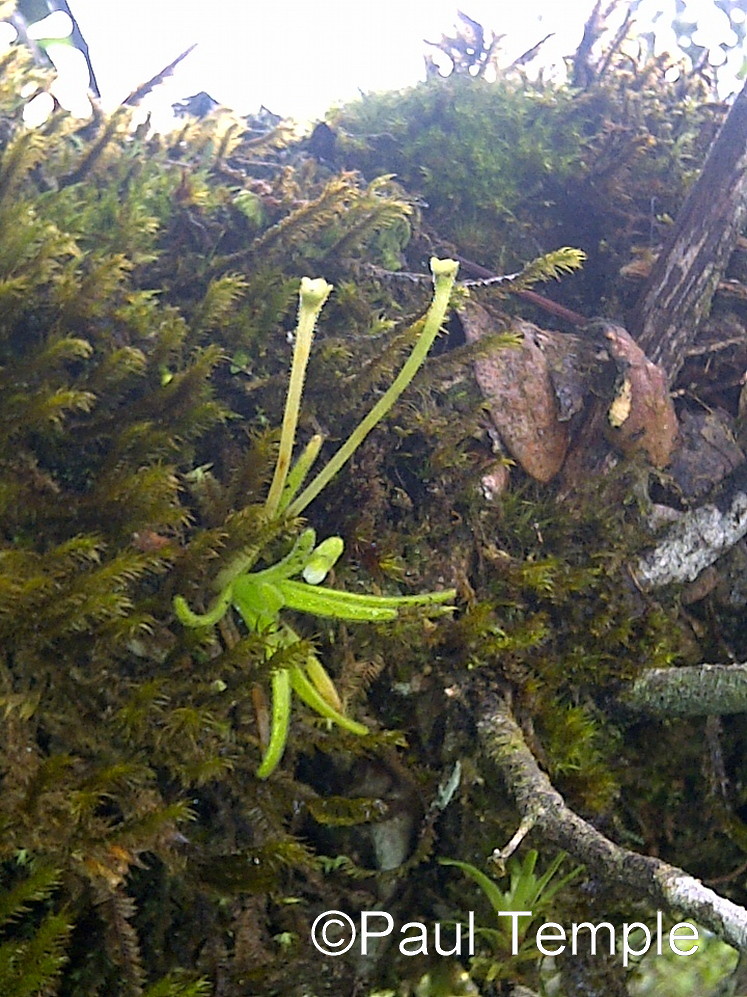 |
| Paul's picture of Pinguicula casabitoana |
 |
| Pinguicula casabitoana |
 |
| Pinguicula casabitoana |
After reading Paul's report, and thinking about the Cuban Pinguicula that I've written about before, I think that it would be interesting to try one of these epiphytic Pings in a humid, Nepenthes environment. I imagine a piece of tree branch - preferably from a tropical tree - with a little notch in it to settle the plant in would be a good medium. This could then be hung on the wall of a terrarium or humid greenhouse. I'm not sure if this would work, but it would definitely be something to try.
[Edit: On 1/6/2016, the famed Paul Temple himself contacted me to let me know the following -
"The species does not occur on a single ridge (on Casabito). There are 3 locations on Casabito, though all within short walking distance of each other. However, there are 8 known locations in all, distributed over 4 mountains that include Casabito. The mountains are all within the same mountain range, the Central Cordillera. Local topography and the nature of the plant life (rainforest, largely impenetrable without a machete) makes it possible (likely?) there are as yet undiscovered locations. Hope this is of interest. Cheers."
Thanks, Paul!]
No comments:
Post a Comment